Why Small Spot Cleaners Keep Showing Up in Households
Most people do not think much about carpet cleaning until something spills. A cup of juice tips off a coffee table, a pet has an accident near the stairs, or a muddy shoe leaves a mark on the back seat of the car. In those moments, hauling out a full-size carpet cleaner feels like too much effort for a small problem, while a paper towel and a bottle of spray cleaner often feels like too little. Compact portable carpet cleaners were designed for that middle ground.
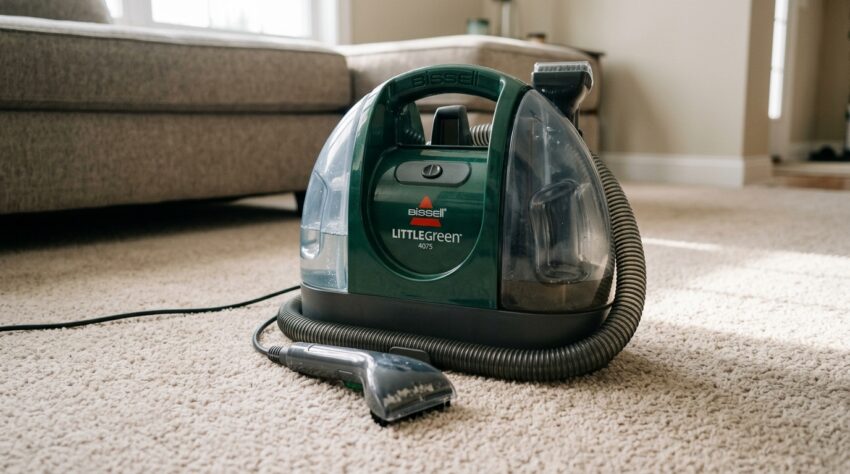
The BISSELL Little Green Mini Portable Carpet Cleaner, model 4075, belongs to that category. It is a small, handheld-style machine meant for spot cleaning carpets, upholstery, stairs, and similar surfaces, rather than for cleaning an entire room at once. This guide approaches the product from a practical angle: what a machine like this is meant to do, which everyday situations it fits, what to think about before buying, and how it compares with other ways of dealing with stains.
A quick note on how to read the details here. Product specifications such as tank size, cord length, weight, and included accessories can vary between listings and model versions, so those specifics are best confirmed on the current product page. This article focuses on the general characteristics of compact portable cleaners and on how a shopper might decide whether one suits their home.
What This Compact Cleaner Brings to a Cleaning Routine
A Small Footprint Built for Spot Work
The defining trait of a mini portable carpet cleaner is its size. Rather than being a full upright machine that rolls across a room, it is a compact unit that can be carried to the mess. That makes it easier to store in a closet, under a sink, or in a utility cupboard, and easier to bring to places a larger machine would struggle to reach, such as the staircase or the inside of a car.
Spray-and-Extract Cleaning
Portable carpet cleaners generally work by combining a cleaning solution with water, applying it to the affected area, and then extracting the dirty liquid back into a collection tank using suction. This approach is different from simply blotting a stain, because the extraction step is intended to lift the loosened dirt and moisture out of the fabric rather than leaving it behind to dry. Readers who want to understand how a specific model handles this process should look at the product page and the included instructions.
Handheld Tools for Different Surfaces
Compact cleaners typically come with at least one hand tool designed to work on carpet, upholstery, and other fabric surfaces. Some versions include a hose and a small brushed nozzle for stairs and furniture. The exact tools included can differ from listing to listing, so confirming what is in the box is a sensible step before ordering.
Two-Tank Design
Many machines in this category use separate tanks for clean solution and for recovered dirty water, which helps keep the two from mixing. Knowing the capacity of each tank is useful for estimating how large a stain can be treated before needing to refill or empty. Again, details should be verified for the specific model.
Designed for Everyday Messes
Rather than aiming at deep, whole-house cleaning, a compact unit like this is intended for the kinds of messes that happen between larger cleaning sessions: spills, tracked-in dirt, pet accidents, and general soiling in high-traffic spots.
Everyday Situations Where a Spot Cleaner Gets Used
The easiest way to understand a product like this is to picture the moments where it comes into play.
The spilled drink on the living room rug. A glass of juice or a mug of coffee goes over. Blotting helps, but a faint stain often remains. A compact cleaner offers a way to treat the area with solution and extract the moisture afterward.
Pet accidents. Households with young pets or older animals sometimes deal with accidents on carpet or upholstery. A portable cleaner is one of several tools people use to address them, alongside appropriate cleaning products. Readers who deal with pet messes should look for guidance on suitable cleaning solutions and be mindful of fabric safety.
Stairs. Carpeted stairs collect dirt where people step, and they are awkward for a full-size machine. A compact unit with a hose and hand tool is often easier to maneuver on each step.
Upholstery. Sofas, armchairs, and dining chairs pick up spills and body oils. Portable cleaners are commonly used on upholstery, provided the fabric’s care tag allows it. Checking the cleaning code on the furniture before using any wet method is wise.
Car interiors. Seats and floor mats in cars see mud, snacks, and spilled drinks. Because a portable cleaner is small and corded or battery-based depending on the model, it can be brought to the driveway for a seat or mat cleanup.
Rental move-out cleanups. People preparing to leave a rental sometimes use a compact cleaner on a few stubborn spots to tidy up before inspection.
High-traffic entry zones. The area just inside the front door often shows wear first. Spot cleaning that section between deeper cleanings is a common use.
Households That Tend to Reach for One
Certain kinds of homes find compact carpet cleaners especially practical.
- Families with young children, where spills on carpet and upholstery are part of the routine.
- Pet owners, who may face the occasional accident or muddy paw prints.
- Apartment dwellers and renters, who may not have space for a large machine but still want a way to deal with spots.
- Car owners, particularly those who carry kids, pets, or work equipment.
- People with limited storage, since a mini unit fits where an upright cleaner might not.
- Anyone who prefers to handle stains promptly, since quick treatment of fresh spills is often more manageable than dealing with set-in marks.
A compact cleaner is likely to be less suited to someone who wants to clean wall-to-wall carpeting across several rooms in one session. In that case, a larger machine or a professional service may be more efficient, and a mini unit can serve as a complement for touch-ups.
Questions to Settle Before Bringing One Home
How large are the messes you expect to treat? A small tank means more frequent refilling and emptying. If most messes are small to medium, that is rarely a problem, but it matters if you hope to treat large areas.
What surfaces will you clean? Carpet, upholstery, and car interiors are all common, but fabrics differ. Always check care labels and test any cleaning method on a hidden area first, particularly on delicate or dye-sensitive materials.
Do you know which cleaning solution to use? Compact cleaners are generally used with a formula designed for the machine. Using unsuitable products can affect results or the machine itself, so following the manufacturer’s guidance matters.
Is the machine corded? Some portable cleaners plug in, while others are battery powered. Cord length affects how far you can work from an outlet, and battery models have runtime limits. Check the specifics of the exact version listed.
How much storage space do you have? Even compact machines need a spot to live, along with their hoses, tools, and cleaning solution bottles.
How will you dry the cleaned area? Wet cleaning leaves carpet and upholstery damp. Good airflow, an open window, or a fan can help the area dry, and it is sensible to avoid walking on damp carpet or replacing furniture too soon.
What are your expectations for old stains? Fresh spills are generally easier to treat than long-set marks. A compact cleaner may improve many stains, but results can vary depending on the stain type, the fabric, and how long the mark has been there. Setting realistic expectations helps avoid disappointment.
Do you know how to maintain it? Emptying the dirty-water tank, rinsing parts, and letting components dry after each use helps prevent odors and keeps the machine working well.
A Realistic Look at Spot-Cleaning Technique
Even a well-designed machine works best when used thoughtfully. A few general habits tend to improve results.
Act quickly. Blot up as much liquid as possible before using the machine. Do not rub, since rubbing can push the stain deeper into fibers.
Vacuum first. Removing loose dirt and debris from the area allows the cleaning solution to work on the stain rather than on surface dust.
Test a hidden spot. Before treating a visible stain, try the machine and solution on an inconspicuous area to check for color changes or damage.
Work in small sections. Compact cleaners are made for spot work, so treating one area at a time is typically more effective than trying to cover a large patch at once.
Avoid over-wetting. Using too much solution can soak the carpet backing or padding and extend drying time. Following the product’s instructions about how much to apply and how many passes to make is helpful.
Make extraction passes. After applying solution, passes with suction help remove the loosened dirt and moisture. Repeating until little liquid is recovered is a common approach.
Let the area dry fully. Good ventilation matters. Damp fabrics that stay wet for too long can develop odors.
Clean the machine afterward. Empty and rinse the tanks and any tools as directed, and store them dry.
Where It Sits Next to Other Ways of Cleaning
Blotting and hand-applied sprays are the simplest option. They cost little and work for minor spills, but they do not extract the dirt and moisture the way suction-based machines are designed to.
Compact portable cleaners, like this BISSELL model, add extraction in a small, easy-to-store package. They are well suited to spot cleaning and to surfaces that are hard to reach with larger machines.
Full-size upright carpet cleaners cover larger areas more quickly and often hold more water, but they take more space and effort to set up, which is why many households use them for periodic deep cleaning rather than spill response.
Professional cleaning services offer a hands-off option for whole-home or heavily soiled carpets. They are typically used occasionally rather than for everyday spills.
Steam-based tools are another approach to cleaning hard and some soft surfaces, though they work differently and are not interchangeable with spray-and-extract machines.
Many homes use more than one of these options. A common pattern is to rely on a compact machine for everyday accidents, a larger machine or professional service for seasonal deep cleaning, and basic blotting for the smallest spills.
Looking After Carpets and Upholstery Between Deep Cleans
A compact cleaner is only one part of keeping fabrics in good shape. A few simple habits reduce how often stains become a problem in the first place.
Vacuum regularly. Loose grit acts like sandpaper on carpet fibers and makes soiling more noticeable. Regular vacuuming keeps the surface cleaner and makes spot cleaning more effective.
Use doormats and a shoes-off habit. A large share of carpet dirt arrives on the soles of shoes. Mats at entrances, and a household habit of removing shoes, noticeably reduce tracked-in soil.
Treat spills straight away. Quick blotting limits how far a liquid spreads and how deeply it settles. Keeping a clean white cloth within reach makes this easier.
Rotate furniture occasionally. Moving furniture a little now and then spreads wear more evenly and avoids permanent traffic paths and heavy indentations.
Check care labels. Upholstery carries cleaning codes that describe which methods are suitable. Following them helps avoid water spotting or fabric damage.
Schedule occasional deeper cleans. Even with good habits, carpets and upholstery benefit from periodic deeper cleaning, whether with a larger machine or a professional service, depending on household needs.
Taken together, these habits make a compact cleaner more of a finishing tool than a rescue tool, which is often how households end up using one.
A Quick Checklist Before You Order
Putting the practical points together, a short checklist can help turn research into a decision.
- Confirm the model and version. Make sure the listing matches the exact model you have in mind, and review the specifications shown on the current product page.
- Check what is included. Look at which hoses, tools, and sample solutions come in the box, and whether additional items need to be bought separately.
- Understand the power source. Confirm whether the machine is corded or battery powered, and consider how that fits with where you plan to use it.
- Think about tank capacity. Consider whether the stated capacity suits the size of messes you expect to treat.
- Review the cleaning solution guidance. Note which solutions the manufacturer recommends and how often you may need to buy more.
- Plan storage. Decide where the machine, its tools, and its solution will live when not in use.
- Look at care and maintenance steps. Check how the tanks and tools are cleaned so that you are comfortable with the upkeep.
- Set realistic expectations. Remember that results depend on the stain, the fabric, and how soon it is treated.
- Read return and support information. Knowing the return window and how to reach support is a practical safeguard.
Working through this list before purchase makes it easier to decide whether a compact portable cleaner matches your home, your habits, and your expectations.
Reader Questions, Answered Plainly
Is a mini carpet cleaner meant to replace a full-size machine? Generally, no. It is designed for spots, stairs, upholstery, and car interiors. A larger machine is usually more efficient for cleaning entire rooms.
Can it be used on upholstery and car seats? Compact portable cleaners are commonly used on those surfaces, but fabric care labels should always be checked first, and a hidden-area test is a sensible precaution.
Will it remove old, set-in stains? Results vary. Fresh stains tend to respond better than long-standing ones, and some marks may only lighten rather than disappear.
How long does the carpet take to dry? Drying time depends on how much water was used, the thickness of the carpet, and airflow in the room. Using a fan or opening a window can help.
Do I need a special cleaning solution? Machines in this category are generally intended for use with solutions designed for them. Following the manufacturer’s instructions helps avoid problems.
Is it practical for pet messes? Many pet owners use compact cleaners for accidents and tracked-in dirt, along with suitable cleaning products. It is worth reading the manufacturer’s guidance about pet-related cleaning.
How should I maintain it? Empty and rinse the tanks and tools after each use, and let parts dry before storing to help prevent odors.
Where can I confirm the exact specifications? The product page is the best place to check tank capacity, included accessories, power source, and dimensions for the specific version listed.
Final Thoughts
The BISSELL Little Green Mini Portable Carpet Cleaner (4075) represents a practical idea: a small, store-anywhere machine for the everyday messes that happen between deeper cleanings. For households with children, pets, carpeted stairs, upholstered furniture, or a car that sees regular use, a compact spot cleaner can make handling spills feel more manageable than relying on paper towels alone.
It is not a replacement for a full-size machine or a professional service, and results will vary depending on the stain, the fabric, and how quickly the spot is treated. The most useful approach is to confirm the specifications on the current listing, check fabric care labels, follow the manufacturer’s instructions, and keep expectations realistic. With those points in mind, readers can decide for themselves whether a compact cleaner fits the way they live.