Setting the Scene: Why Upholstery Gets Dirty Faster Than We Notice
Sofas, armchairs, dining chairs, and car seats do a lot of quiet work. They absorb spilled drinks, crumbs, skin oils, pet hair, and the general dust of daily life. Because the dirt builds up gradually, the fabric often looks acceptable until a bright light, a visitor, or a fresh spill shows how much has settled in. At that point, many people discover that a quick wipe is not enough, but that a full-size carpet cleaner is awkward for furniture.
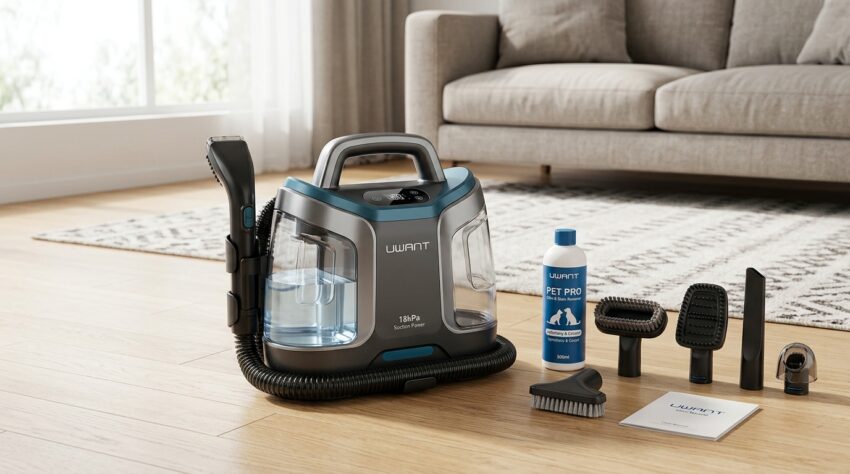
Compact upholstery cleaning machines occupy that gap. The Uwant 18Kpa Upholstery Cleaner Machine, sold with a Pet Pro cleaner and a tools set, is one example. This guide explains what a machine like this is generally designed to do, what the listed suction figure means, where it fits into a household, and what is worth weighing before ordering. The aim is to be informative rather than persuasive, so that readers can decide whether this style of product suits their own home.
A quick note on specifics. Details such as tank sizes, power source, cord length, weight, and the exact contents of the tools set can vary between listings and versions. The product page is the best place to confirm them. This article concentrates on the general characteristics of suction-based upholstery cleaners and on practical decision-making, without promising particular cleaning results.
Breaking Down the Product Listing
An Upholstery-Focused Machine
The product is described as an upholstery cleaner machine, which signals that it is designed with fabric furniture in mind, rather than as a general-purpose vacuum. Machines in this category typically apply cleaning solution to fabric and then use suction to extract the dirty liquid, aiming to lift away dirt and moisture rather than just spreading it around.
The 18Kpa Suction Rating
The listing highlights 18Kpa, a measure of suction pressure. Higher values generally indicate stronger suction, which can help draw liquid out of fabric during extraction. It is worth remembering that suction numbers are only one part of how a machine performs. Real-world results also depend on the nozzle design, the amount of water used, the type of fabric, and technique. Comparing the number across brands can be difficult because manufacturers do not always measure suction in the same way.
Pet Pro Cleaner Included
The listing mentions a Pet Pro cleaner. Cleaning formulas that are marketed for pet households are generally intended for the kinds of messes animals create. What the formula contains, how much is included, and how it should be used are details found in the product documentation. As with any cleaning product, following the label directions and checking fabric compatibility is important.
A Tools Set
The product comes with a set of tools. Tool sets for upholstery cleaners often include a hand tool for fabric surfaces, a smaller nozzle for crevices or stairs, and a hose to connect them. Which tools are included, and how many, should be verified on the listing. The variety of attachments tends to determine how many different surfaces the machine can reach, from sofa cushions to car seats to carpeted stairs.
A Single-Unit Listing
The listing is for a single machine. That means any additional solution, extra tools, or replacement parts would need to be purchased separately if needed.
Compact, Furniture-Friendly Size
Machines intended for upholstery are usually smaller than upright carpet cleaners. That makes them easier to carry, store, and use on furniture, though exact dimensions and weight should be checked on the product page.
What the 18Kpa Number Means in Everyday Terms
A short explanation can help readers interpret the figure without overstating it.
Kilopascals measure pressure. In cleaning machines, kPa describes suction pressure. A higher number generally means the machine can pull with more force, all else being equal.
Suction helps with extraction. After cleaning solution is applied to fabric, suction draws the loosened dirt and liquid back into a tank. Stronger suction can help recover more moisture, which may shorten drying time, though this depends on many other factors.
Airflow and nozzle design matter too. A well-designed nozzle that maintains good contact with the fabric can make a big difference. Suction alone does not guarantee better results.
It is not a promise about stains. Even with good suction, some stains are stubborn, especially if they have been set for a long time. A realistic expectation is that cleaning can improve the appearance of many fabrics, but not every mark will disappear.
Compare carefully. When looking at different machines, reading the full specifications and descriptions is more informative than comparing one number.
Where This Kind of Machine Gets Used
Sofas and armchairs. These are the most common targets. Over time, seat cushions and armrests collect body oils and spills, and an upholstery cleaner offers a way to treat them in place.
Dining chairs. Fabric dining chairs take crumbs and spills at every meal, and they are often awkward to clean by hand.
Car interiors. Seats, floor mats, and carpeted areas in cars see mud, snacks, and drinks. A compact machine can be carried to the driveway for a seat cleanup.
Pet-affected furniture. Households with animals often find fur, dirt, and the occasional accident on sofas and pet beds. A formula marketed for pet households and a set of tools can be part of a routine for these areas.
Mattresses and bedding that cannot be washed. Some people use upholstery cleaners on mattress surfaces, though it is important to check manufacturer guidance and use minimal moisture so the mattress can dry fully.
Stairs and carpeted corners. A hose and a hand tool can reach stairs and tight spaces that a larger machine cannot.
Rugs and small carpeted areas. For small rugs or spot treatment, a compact upholstery cleaner may be convenient, provided the rug’s care instructions allow it.
Spill response. Fresh spills on fabric are often easier to deal with than old ones. A compact machine kept within reach makes it easier to respond quickly.
Who Might Find It Practical
- Families with young children, where spills on sofas and chairs are routine.
- Pet owners, who deal with fur, dirt, and accidents on fabric furniture.
- Car owners, especially those who carry kids, pets, or work gear.
- Renters and apartment dwellers, who want a way to keep furniture fresh without paying for frequent professional cleaning.
- People with light-colored upholstery, where marks show quickly.
- Anyone preparing to sell or give away furniture, who wants to refresh its appearance.
- Households that prefer to handle messes themselves, rather than waiting for a professional visit.
A compact upholstery cleaner may be less suited to someone who wants to clean large areas of wall-to-wall carpet, or who needs a machine that handles heavy-duty, whole-home jobs. In those cases, a larger carpet cleaner or professional service is typically more efficient.
Things Worth Weighing Before Ordering
Check the power source and cord. Confirm whether the machine is corded or battery powered, and consider the cord length and where outlets are located relative to the furniture you plan to clean.
Verify what is in the box. Look closely at the tools included and whether the Pet Pro cleaner is a sample or a full bottle. Think about how long it will last and what replacement solution might cost.
Think about tank sizes. Smaller tanks mean more frequent refilling and emptying. If you plan to clean several pieces of furniture in one session, tank capacity matters.
Understand the weight and handling. A machine that is easy to carry up stairs or into a car is more likely to be used regularly.
Check fabric care labels. Upholstery carries cleaning codes that indicate suitable cleaning methods. Some fabrics are meant to be cleaned with water-based solutions, while others call for solvent-based products or professional care. Using the wrong method can damage the fabric.
Always test a hidden spot. Before cleaning a visible area, try the machine and solution on an inconspicuous part of the furniture to check for color changes or texture damage.
Plan for drying time. Fabrics will be damp after cleaning. Ventilation, an open window, or a fan helps the furniture dry, and it is wise to keep pets and children away until it is fully dry.
Be realistic about odors and old stains. Cleaning can help refresh the surface of fabric, but deep-set odors or long-set stains may not fully disappear. Setting expectations helps avoid disappointment.
Consider maintenance. Emptying and rinsing tanks and tools after each use, and letting parts dry before storage, helps keep the machine working well and prevents odors from forming inside it.
Think about storage. Even a compact machine needs a home, along with its tools and solution bottles.
Use solutions as directed. Cleaning formulas are designed to be diluted or applied in certain ways. Following the label avoids residue and protects both the fabric and the machine.
Fabric Safety and Test-Spot Habits
Good habits can prevent most upholstery cleaning mishaps.
Read the tag first. Furniture tags use letter codes to describe cleaning methods. Understanding the code on your piece before you begin is the single most useful step.
Test in a hidden area. Apply a small amount of solution to a section no one will see, such as the back or underside. Let it dry and check for color transfer, fading, or texture changes.
Start with less moisture. It is easier to add another pass than to undo over-wetting. Too much water can soak into padding and lengthen drying time.
Work in small sections. Treating one area at a time keeps you in control and helps avoid water rings.
Use gentle motions. Aggressive scrubbing can damage delicate fabrics. Following the tool’s intended use is usually enough.
Make extraction passes. After applying solution, passes with suction help lift loosened dirt and moisture. Repeating until little liquid is recovered is a common approach.
Let it dry fully. Allow ample time, with good airflow, before using the furniture again.
Know when to call a professional. For valuable, delicate, or heavily soiled pieces, a professional cleaner may be a safer choice.
A Simple Cleaning Sequence
Although each machine has its own instructions, a general sequence looks like this.
Prepare the area. Remove cushions or covers if possible, and vacuum loose dirt, crumbs, and pet hair first.
Fill the clean-solution tank. Mix the cleaner with water as directed, being careful not to overfill.
Test a small area. Confirm the fabric tolerates the solution.
Apply and clean in sections. Work from the top of the furniture down, treating one section at a time and following the machine’s instructions.
Extract. Make passes with suction until the fabric feels only slightly damp.
Rinse if directed. Some instructions suggest a rinse pass with clean water to reduce residue.
Dry thoroughly. Use fans, open windows, and time.
Clean the machine. Empty the dirty-water tank, rinse the tanks and tools, and let everything dry before storage.
How Upholstery Cleaners Compare With Other Options
Hand cleaning with cloths and sprays is inexpensive and fine for minor marks, but it does not extract dirt and moisture in the same way a suction-based machine is designed to.
Upholstery and portable carpet cleaners, like this Uwant model, offer extraction in a compact size. They are suited to furniture, car interiors, and small areas.
Full-size carpet cleaners are better for large expanses of carpet but are bulkier and less convenient for furniture.
Handheld vacuums remove dry dirt and pet hair but are not designed for wet cleaning.
Steam cleaners use heat and moisture on certain surfaces, but they work differently and are not suited to all fabrics.
Professional services are a good option for large jobs, delicate fabrics, or occasional deep cleaning, and they can complement a machine used for everyday messes.
Many households combine approaches, using a handheld vacuum for regular upkeep, a compact machine for spills and seasonal refreshes, and a professional service for occasional deep cleaning.
A Checklist Before You Order
Turning general interest into a confident decision is easier with a short list of practical checks.
- Confirm what the listing includes. Review the tools, hose, and cleaner that come with the machine, and note whether more items need to be purchased separately.
- Check the power source and cord length. Make sure they suit the places you plan to clean, whether that is a sofa near an outlet or a car in the driveway.
- Look at tank capacity. Consider how many pieces of furniture you might clean in one session, and how often you would need to refill or empty the tanks.
- Review cleaning solution guidance. Find out how the Pet Pro cleaner is used, how much it takes per cleaning, and what replacement solution might cost.
- Think about the fabrics you own. Check the care tags on your sofa, chairs, and car seats to confirm that water-based cleaning is appropriate.
- Plan for drying and ventilation. Decide where you will clean and how you will help the furniture dry afterward.
- Consider storage. Pick a spot for the machine, its tools, and its solution bottles.
- Set realistic expectations. Remember that results depend on the stain, the fabric, and how quickly it is treated, and that some odors and marks may need extra steps or professional help.
- Read return and support information. Knowing the return window and how to contact support is a practical safeguard.
Taking a few minutes with this list before ordering helps ensure that the machine you choose matches your furniture, your household, and your expectations.
Frequently Asked Questions
What does 18Kpa mean? It is a measure of suction pressure. Higher values generally indicate stronger suction, though real-world results also depend on nozzle design, technique, and the type of fabric.
Is this machine only for upholstery? It is described as an upholstery cleaner, but compact machines of this type are commonly used on car interiors, small rugs, stairs, and similar surfaces, provided care instructions allow it.
What is the Pet Pro cleaner for? It is a cleaning formula marketed for households with animals. Details about its contents and use are in the product documentation, and label directions should be followed.
Will it remove old stains and odors? Results vary. Fresh stains generally respond better than long-set ones, and deep-set odors may need additional steps or professional help.
Can it be used on any fabric? No. Always check the furniture’s care label and test a hidden area first, since some fabrics can be damaged by water-based cleaning.
How long does furniture take to dry? Drying time depends on how much water was used, the thickness of the fabric and padding, and airflow. Fans and ventilation help.
How should I maintain the machine? Empty and rinse the tanks and tools after each use and let them dry before storing, to help prevent odors.
Where can I confirm the exact specifications? The current product page is the best place to check tank sizes, power source, included tools, and dimensions.
Wrap-Up
The Uwant 18Kpa Upholstery Cleaner Machine with Pet Pro cleaner and tools is an example of a compact, suction-based fabric cleaner designed for everyday messes on sofas, chairs, car seats, and similar surfaces. For households with children, pets, or light-colored upholstery, a machine like this can make it easier to respond to spills and keep fabrics looking fresher between professional cleanings.
It is not a substitute for a full-size carpet cleaner or professional service, and results will vary based on the fabric, the stain, and how quickly it is treated. The best approach is to confirm the specifications on the current listing, check fabric care labels, test a hidden area, follow the manufacturer’s instructions, and keep expectations realistic. With those points in mind, readers can decide for themselves whether this style of machine fits their home.