Introduction
Stains rarely appear at a convenient time. A cup of tea tips onto the rug, a dog tracks mud across the hallway, a child leaves a sticky handprint on the sofa arm, or a spill in the car goes unnoticed until the next morning. By then the mess has often worked its way into the fibers, and a vacuum or a quick wipe cannot reach it.
Portable carpet and upholstery cleaners were designed for these moments. They are small enough to store in a closet and light enough to carry to the problem, and they follow a simple idea: apply a cleaning solution, loosen the soil trapped in the fabric, and draw the dirty liquid back out. For small jobs, this can feel more practical than renting a large machine or booking a professional service.
This guide looks at a portable carpet and upholstery cleaner described as suitable for deep cleaning rugs, couches, and car interior stains, positioned as pet and family friendly, and rated for 120V power. It explains what this kind of machine is, how its main features are generally designed to work, who may find it relevant, and what is worth weighing before choosing one.
The article is based on general knowledge of the product category and not on hands-on use. It does not promise specific results, and readers who need exact specifications, included tools, or current details should confirm them on the official product listing.
Product Overview
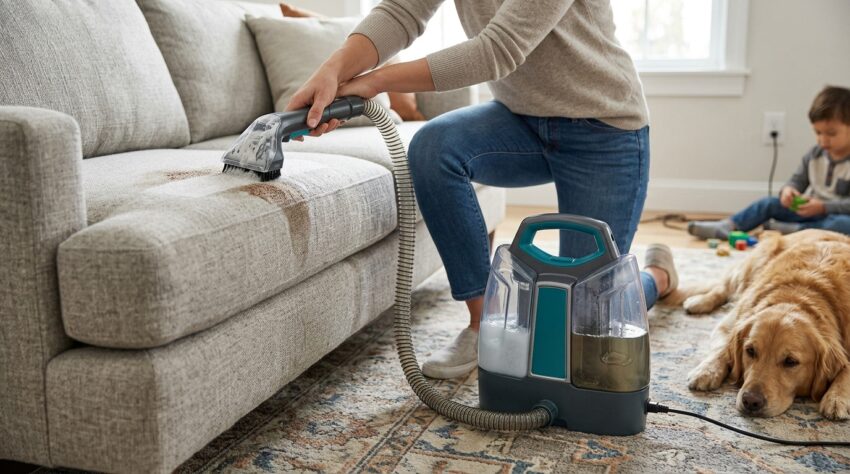
This product is a portable carpet and upholstery cleaner. Machines of this type are compact, corded units built for spot and small-area cleaning rather than whole-room work. A typical setup includes a tank for clean water and solution, a second tank that collects dirty liquid, a flexible hose, and one or more handheld tools attached to the end of the hose.
The listing title offers several clues about the product’s intended role:
- Portable: the machine is meant to be carried to the mess instead of being wheeled across a room.
- Carpet & Upholstery Cleaner: it is intended for soft surfaces such as rugs, carpet, couches, and fabric seating.
- Deep Cleaning: a descriptive phrase suggesting the machine is meant to work below the surface of the fabric. How deep this goes in practice depends on many factors.
- Rugs, Couch, Car Interiors: the surfaces the product is marketed for.
- Pet & Family Friendly: a positioning statement indicating that the machine is aimed at households with animals and children. It is a marketing description, and readers should check the official listing for what it specifically refers to.
- 120V: the electrical rating, which is standard for household outlets in North America.
The general purpose is straightforward. It is meant to help households address stains, spills, and soiled spots on soft surfaces around the home and in the car. It is best understood as a targeted tool for everyday messes, not as a replacement for professional deep cleaning of an entire house.
How Portable Cleaners Generally Work
Designs vary, but most machines in this category follow a similar sequence:
- Clean water and a suitable cleaning formula go into the solution tank.
- The machine delivers the solution to the surface through the hose and tool.
- Bristles or a textured surface on the tool help loosen soil from the fibers.
- Suction pulls the used liquid into a separate recovery tank.
Because liquid is applied and then extracted, the treated area is usually damp afterward and needs time to dry. The approach is closer to rinsing and extracting than to scrubbing with a cloth.
Who This Type of Machine May Suit
A portable upholstery and carpet cleaner is often considered by:
- Pet owners who deal with occasional accidents on rugs, carpet, or furniture
- Parents facing frequent spills and sticky marks
- Renters who want to handle stains without arranging a service
- People with carpeted stairs, fabric sofas, or car seats that are awkward for large machines
- Households that prefer to act on a mess quickly, before it sets
Whether it fits depends on the surfaces involved, how often messes happen, and how much storage space is available.
Key Features
Product titles tend to compress many ideas into a few words. The sections below explain what each main feature generally means and the practical value it may offer.
Deep Cleaning Positioning
The phrase “deep cleaning” usually describes a machine that sprays solution and extracts it with suction, rather than one that only wipes the surface. The goal is to reach soil that has settled into the fibers. How effective this is depends on the stain, the fabric, the amount of liquid applied, and technique. It is best read as a description of intent and not a guarantee of results.
Multi-Surface Use
The title mentions rugs, couches, and car interiors. Portable cleaners are commonly used on all three, along with stairs and fabric furniture. Having one machine that moves between these jobs may reduce the need for separate tools.
Not every material tolerates water-based cleaning, though. Delicate fabrics, natural fibers, and items marked for dry cleaning only may not be appropriate. The care label on an item matters more than the product name.
Pet and Family Friendly Positioning
This phrase suggests the machine is intended for homes where pets and children create frequent messes. It may refer to the types of tools included, the cleaning formulas recommended, or simply the target audience. Because the meaning is not always specific, it is worth checking the official listing to see what, if anything, it refers to. It is also worth checking that any cleaning formula used is suitable for homes with pets and children, following the product’s own label.
Compact, Portable Body
A small body is designed to be lifted and carried to the location of the mess, whether that is a corner of a living room, a flight of stairs, or the back seat of a car. For people who have handled larger carpet cleaners, the difference in effort can be considerable.
The trade-off is capacity. Small tanks suit spot cleaning well but are not ideal for large surfaces.
Spray and Extraction Action
Portable cleaners combine solution delivery with suction. The liquid is applied to the surface, and the machine then draws it back out together with loosened dirt. The aim is to lift soil and remove it, instead of leaving it behind.
Slow, moderate passes tend to be more helpful than soaking an area.
Handheld Tools and Hose
The tool at the end of the hose does the actual work. Many are fitted with bristles or textured edges that agitate fibers while solution is applied and extracted. A flexible hose lets the user clean stairs, furniture, or a vehicle interior without constantly repositioning the main body. Included tools and hose length vary between models, so the official listing is the best place to confirm them.
Separate Solution and Recovery Tanks
Keeping fresh solution apart from recovered liquid is a standard design in this category. It helps prevent dirty water from being sprayed back onto the surface and lets the user see how much has been collected. Tank size affects how often refilling and emptying are needed.
120V Corded Operation
A 120V rating indicates that the machine is designed for standard household outlets in regions that use that voltage. Corded power supports steady spraying and suction without a battery to charge. The drawback is reach. An extension cord or some planning may be needed for stairs, other rooms, or a vehicle parked outdoors. Readers outside regions that use 120V should check compatibility before choosing any electrical appliance.
Materials and Design
Compact cleaning machines are usually made from molded plastic, with transparent or semi-transparent tanks so the liquid level is easy to see. Plastic keeps the body light enough to carry even when it holds water.
Build and Structure
Because this equipment handles liquid, a few design details deserve attention. Readers may want to look at how securely the tanks lock into place, how well the lids seal, how firmly the hose attaches, and how comfortable the handle feels when the tanks are full. These small points often shape daily use more than a specification sheet does.
Tank Design
A clear tank makes it easier to notice when solution is running low and how much dirty water has been collected. A wide opening simplifies filling and rinsing, while a narrow one can be awkward when emptying liquid that contains hair or debris.
Tool and Hose Storage
Many portable cleaners include a place on the body to store the hose and tools. It may seem minor, but it keeps accessories together and makes the machine easier to bring out and put away.
Weight When Filled
Even a small machine becomes noticeably heavier once the tank is full. Carrying it up stairs or out to a car feels different from lifting it empty, so it helps to check the listed weight and imagine it filled.
Appearance
Styling is generally functional. For most people, ease of use matters more than looks, although a tidy design is appreciated if the machine is stored where it can be seen.
Performance
Responsible discussion of performance separates what a product is designed to do from what any individual will experience. This article is not based on hands-on testing, so the following describes design intent and not measured results.
What the Machine Is Designed to Do
This cleaner is designed to help clean localized areas of carpet, rugs, upholstery, and vehicle interiors. It delivers a cleaning solution, helps loosen soil with a handheld tool, and extracts the dirty liquid.
Factors That Influence Real-World Results
Outcomes with any portable cleaner depend heavily on circumstances. Some of the main variables include:
- Type and age of the stain: Fresh spills are usually easier to treat than old, set-in marks.
- Fabric type: Synthetic fibers, natural fibers, and delicate upholstery respond differently.
- Depth of the mess: Liquids that reach padding or cushion foam can be hard to extract fully.
- Cleaning formula: A product intended for the machine and suited to the surface matters.
- Technique: Slow, overlapping passes with moderate liquid generally work better than rushing or oversaturating.
- Drying conditions: Airflow, humidity, and room temperature affect how quickly the area dries.
Because of these factors, two households can describe the same type of machine very differently. A mark that fades in one home may stay partly visible in another.
Odors and Pet Messes
Pet odors can be more stubborn than they look. Some sit near the surface, while others sink into padding or the subfloor. A portable cleaner is designed mostly for the surface and upper fibers, so long-standing or deep odors may call for extra steps or professional help.
Drying Time and Dampness
Treated areas remain damp for some time. Drying time depends on the amount of water used, humidity, and ventilation. Opening a window or running a fan may help, and it is generally wise to keep children and pets away until the area has dried fully.
Noise and Handling
Extraction machines produce noise through the motor and suction system. Loudness varies, and some pets are sensitive to it. Handling depends on weight, hose flexibility, and how comfortable the tools are to hold.
Reading Product Titles Sensibly
Phrases like “deep cleaning” and “pet and family friendly” are descriptive labels, not measured guarantees. A balanced approach is to look at the actual specifications and then weigh them against real-life factors such as surface types and how often messes occur.
Common Uses
A portable carpet and upholstery cleaner is generally intended for targeted jobs rather than whole-home upkeep. These are some situations in which people commonly use this kind of machine.
Pet Accidents
Accidents on carpet and rugs are among the most common reasons people look at this category. Treating them promptly may limit how deeply they settle, although results vary from case to case.
Couch and Fabric Furniture
Sofas, armchairs, and ottomans can pick up spills and marks over time. After checking the fabric care label, a portable cleaner may be used with a suitable tool.
Rugs and Entryways
Dirt from shoes and paws tends to gather near doors. A portable cleaner lets the user focus on those zones without treating an entire room.
Car Seats and Floor Mats
Vehicle interiors are exposed to mud, crumbs, and spills. A portable machine can be carried out to the car, provided there is access to power.
Carpeted Stairs
Stairs collect dirt in repeating spots and are awkward for large machines. A compact unit with a hose and a narrower tool is often easier to manage on steps.
Everyday Spills
Coffee, juice, sauce, and snack crumbs often end up on rugs and fabric chairs. Early attention is usually easier than waiting until a spill has dried.
Soft Furnishings
Fabric pet beds, throw cushions, and similar items can hold dirt and odor. Whether machine cleaning is appropriate depends on the material and the manufacturer’s care instructions.
Advantages
Every product has strengths, and it helps to look at them without exaggeration. These are some possible advantages of this style of machine.
Easy to Store and Carry
A portable body takes up less room than a full-size cleaner, which may matter in apartments and smaller homes.
Range of Surfaces
The ability to work on rugs, couches, stairs, and car interiors gives one machine a variety of uses.
Quick Response to Messes
Having a machine ready at home may make it simpler to treat a spill early, when cleanup is often more manageable.
Separate Tanks
Keeping fresh solution apart from recovered liquid helps the machine work more cleanly and shows how much dirt has been removed.
Focused Cleaning
Instead of treating an entire room for one stain, the user can concentrate on a specific area, which may save time and effort.
Steady Corded Power
Plugging into an outlet means there is no battery to charge or replace.
Things to Consider
A balanced discussion has to include possible limitations. Suitability depends on personal preferences, household needs, and the types of messes involved.
Not Designed for Whole-Room Cleaning
Small tanks and a compact footprint make this style of machine better for spots and small areas. Using it on an entire room may require many refills and a lot of time.
Results Depend on the Stain
Old or deeply set stains may be harder to treat. Keeping expectations realistic is wise, since no machine can remove every mark.
Fabric Compatibility
Not all fabrics are appropriate for water-based cleaning. Checking care labels and testing a hidden spot first is a widely recommended precaution.
Drying Time
Surfaces stay damp after cleaning. In humid or poorly ventilated rooms, drying may take longer.
Tank Management
Small tanks need frequent refilling and emptying, especially when several areas are treated in one session.
Cord and Outlet Access
A corded machine needs a nearby outlet. For stairs, vehicles, or distant rooms, an extension cord or some planning may be needed.
Cleanup After Use
Tanks, hoses, and tools should be rinsed and dried after each session to prevent odors and buildup. Some people find this extra step tedious.
Personal Preferences
Weight, noise, hose length, and tool shape are subjective. What feels comfortable to one person may not suit another.
Comparison with Similar Product Categories
Instead of comparing individual brands, it is more useful to see how portable carpet and upholstery cleaners differ from other cleaning categories.
Versus Full-Size Carpet Cleaners
Full-size machines are designed for entire rooms and typically have larger tanks and wider cleaning paths. They are heavier and need more storage space. Portable cleaners trade capacity for convenience and suit small areas and quick treatment.
Versus Standard Vacuum Cleaners
Vacuums remove dry debris such as dust, crumbs, and hair. They are not designed for liquid stains or soil that has soaked into fibers. A portable carpet cleaner addresses a different problem, and many households use both.
Versus Handheld Steam Cleaners
Steam cleaners rely on vapor for certain tasks and work differently from spray-and-extract machines. Suitability depends on the material, and some people prefer one approach over the other.
Versus Manual Cleaning
Cloths, brushes, and store-bought stain removers are the traditional approach. They need no equipment but rely heavily on scrubbing and do not extract liquid from deeper in the fibers. A machine adds convenience and extraction, but it also adds cost, storage needs, and upkeep.
Versus Professional Services
Professionals bring larger equipment and experience with a range of stains and fabrics, which may suit big areas or difficult situations. A home machine allows immediate action without scheduling.
Maintenance and Care
Good upkeep helps any cleaning machine work as intended for longer. Always consult the manufacturer’s manual for model-specific guidance, and unplug the machine before maintenance.
Empty and Rinse the Recovery Tank
After each use, empty the dirty-water tank and rinse it with clean water. Leftover liquid can cause odors and buildup.
Rinse the Solution Tank
If any solution remains, empty and rinse the tank, especially if the machine will be stored for a while.
Clean the Tools and Nozzles
Hair, fibers, and residue can collect in the tools. Rinse or wipe each one as the manual suggests, and make sure spray openings are clear.
Check the Hose
Look for blockages or trapped debris. Clearing an obstruction gently can help maintain suction and flow.
Let Parts Dry
Allow removable parts and tools to air-dry before reassembling and storing them. Damp components can encourage odors or mildew.
Wipe the Exterior
A slightly damp cloth is enough to clean the outside. Keep liquid away from electrical parts and the cord.
Use Suitable Formulas
Products intended for the machine are generally recommended. Unsuitable chemicals may damage internal parts or leave residue on surfaces.
Storage
Keep the machine in a dry place away from heat sources. Storing the hose and tools together with the body makes them easier to find later.
Frequently Asked Questions
1. What type of machine is this portable carpet and upholstery cleaner?
It is a compact, corded cleaner intended for small-area cleaning. It delivers a cleaning solution, helps loosen soil with a handheld tool, and extracts the dirty liquid into a recovery tank.
2. What does “deep cleaning” mean here?
It generally describes a spray-and-extract approach meant to reach soil below the surface of the fabric. Actual results depend on the stain, the material, and technique.
3. What does “pet and family friendly” refer to?
It is a positioning statement indicating the machine is aimed at households with pets and children. The specific meaning is best confirmed on the official listing.
4. What does 120V mean?
It is the electrical rating, which matches standard household outlets in regions that use 120-volt power. Readers elsewhere should check compatibility before using it.
5. Can it clean an entire room of carpet?
It is intended mainly for spots and small areas. Cleaning a whole room is possible but may involve many refills and a lot of time, so some people prefer a full-size machine for that job.
6. Is it safe for all upholstery?
No. Suitability depends on the fabric. Always check the care label, and try a small hidden area first.
7. Will it remove every stain?
No machine can guarantee that. Fresh stains are generally easier to address, while older or deeply set marks may remain partly visible.
8. Can it help with pet odors?
It may help with surface-level odors by removing the residue that causes them. Deeper odors that have soaked into padding or subfloors may need additional steps.
9. How long does carpet take to dry?
Drying time depends on how much liquid was used, the humidity, the temperature, and ventilation. An open window or a fan may help.
10. Can it be used in a car?
Many people use this type of machine on car seats and floor mats if they can reach a power source. Always check the fabric type first.
11. How should it be cleaned after use?
Empty and rinse both tanks, clean the tools, check the hose for blockages, and let everything dry before storing. The manual has model-specific instructions.
12. What should I consider before choosing a portable carpet cleaner?
Think about the surfaces you want to clean, how often messes occur, available storage, cord reach, and how much weight you are comfortable carrying. Reviewing the manufacturer’s specifications can help clarify whether the machine suits your needs.
Final Thoughts
This portable carpet and upholstery cleaner represents a practical category of home cleaning equipment: a compact, corded machine meant to help households deal with spills, stains, and everyday messes on rugs, couches, stairs, and car interiors. Its portable format and family-oriented positioning are designed to make quick, targeted cleaning feel more approachable.
As with any appliance, it involves trade-offs. A small body is easy to store and carry but limits tank capacity. A machine described as deep cleaning still depends on the fabric, the age of the stain, and technique. And although a portable cleaner can reduce the effort of tackling accidents, it also brings upkeep tasks such as rinsing tanks and drying parts.
A sensible way to decide is to start with your own household. Think about which surfaces you clean most often, how frequently messes happen, how much storage space you have, and how comfortable you are with the upkeep involved. A machine that fits those needs is more likely to feel worthwhile than one chosen for a single feature.