The Appeal of One Tool for Many Small Jobs
Households rarely have a single cleaning problem. A spill on the living room rug, a muddy patch near the back door, a stain on a dining chair, and a mess in the back seat of the car all happen on different surfaces and at different times. Owning a separate tool for each situation would take a lot of storage space, which is one reason compact, multi-purpose cleaners have a following.
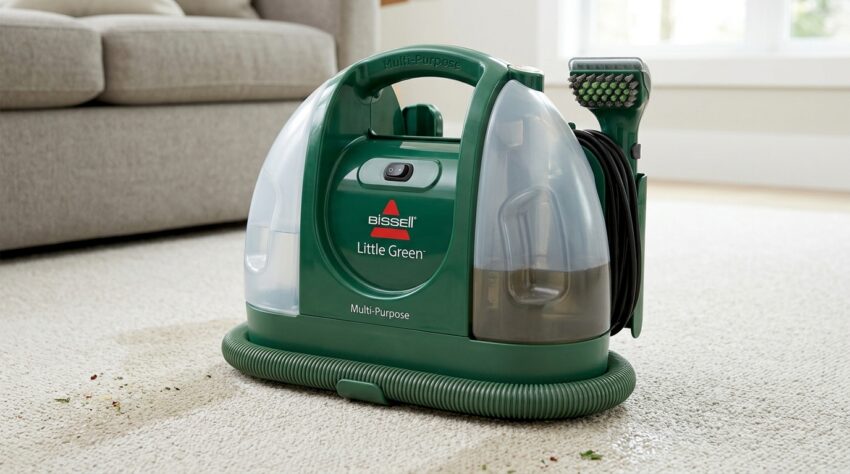
The BISSELL Little Green Multi-Purpose Portable Carpet Cleaner, model 3353D, is described by its name as a versatile compact machine. This guide approaches it room by room: what a multi-purpose portable cleaner is generally designed to do, where in the home it tends to be used, who may find it practical, and what is worth thinking through before ordering. It is written to inform rather than persuade, so that readers can decide whether this kind of machine suits their own household.
A quick note on specifics. Details such as tank capacity, power source, cord length, weight, and the exact tools included can vary between listings and versions, so they are best confirmed on the current product page. This article focuses on the general characteristics of compact portable cleaners and on practical decision-making, and it does not promise any particular cleaning result.
What “Multi-Purpose” Is Meant to Signal
A Compact, Portable Format
The core of the concept is size. A portable carpet cleaner is small enough to carry to the mess, store in a closet, and use in places a larger machine cannot easily reach, such as stairs, car interiors, and furniture.
Spray-and-Extract Cleaning
Machines like this generally work by applying a mixture of water and cleaning solution to fabric and then using suction to draw the dirty liquid into a recovery tank. The extraction step is intended to remove loosened dirt and moisture rather than leaving it behind. How each model handles the details is described in its instructions.
Tools for Different Surfaces
The “multi-purpose” label usually points to the variety of surfaces that the machine and its tools are designed for. These often include carpet, upholstery, stairs, and car interiors. A hose and a hand tool are common additions that make it possible to reach tight or awkward spots. The exact tools in the box should be confirmed on the listing.
Separate Solution and Recovery Tanks
Many compact cleaners use one tank for clean solution and another for recovered dirty water. Keeping them separate prevents the dirty water from contaminating the clean solution. Capacity of each tank determines how large an area can be treated before refilling or emptying.
Designed for Spot Cleaning
A machine in this category is meant for stains, spills, and high-traffic areas rather than complete room cleaning. That focus is part of what keeps it small and easy to store.
Everyday Convenience
For many people, the point of a portable cleaner is not performance on a single heroic task but the convenience of being able to deal with ordinary messes quickly, before they set.
A Room-by-Room Walkthrough of Where It Gets Used
Living room. Sofas, armchairs, and area rugs take the bulk of spills and wear. A portable cleaner is commonly used on fabric furniture and on high-traffic carpet near seating areas, provided the care labels permit wet cleaning.
Dining area. Fabric dining chairs collect food drips and crumbs at every meal. A compact machine with a hand tool is often easier to use on chairs than a full-size cleaner.
Kitchen and entryway. Mats and small rugs near the sink, stove, and back door see mud, grease, and moisture. A portable cleaner can be used on washable or compatible rugs, following the manufacturer’s care instructions.
Bedrooms. Carpet near the bed and upholstered headboards or chairs can pick up stains and dust. Some people also use compact cleaners on mattress surfaces, though it is important to use minimal moisture, follow the mattress manufacturer’s guidance, and allow thorough drying.
Kids’ rooms and playrooms. Juice, art supplies, and snacks have a way of ending up on carpet. Prompt spot cleaning is a common use.
Bathrooms. Bath mats and carpeted bathroom floors, where they exist, absorb moisture and can develop odors. A compact cleaner may be used on compatible mats, with attention to drying.
Stairs and hallways. Carpeted stairs are awkward for large machines. A hose and hand tool allow work on each tread without moving a heavy unit.
Home office. Fabric office chairs and carpet near a desk can show wear. Spot cleaning is a way to refresh them.
Car interiors. Seats, floor mats, and trunk liners collect mud, snacks, and spills. A portable machine can be brought to the driveway for these jobs.
Garage, RV, and boat interiors. People who maintain recreational vehicles or secondary spaces sometimes use compact cleaners on carpeted or upholstered areas, again subject to care instructions and drying time.
Pet areas. Pet beds, carpet near feeding stations, and favorite napping spots are common targets, with appropriate cleaning products and attention to fabric care.
Who Tends to Find This Practical
- Families with young children, where spills on carpet and upholstery are routine.
- Pet owners, who deal with paw prints, hair, and occasional accidents.
- Renters and apartment dwellers, who want to keep carpets and furniture in good condition without storing a large machine.
- Car owners, especially those who carry kids, pets, or equipment.
- People with small spaces, where a compact unit is easier to store than an upright cleaner.
- Anyone who prefers to act quickly on stains, since fresh spills are generally easier to treat.
- Households that already own a larger machine, and want a convenient tool for small jobs.
A compact multi-purpose cleaner is less suited to someone who wants to clean wall-to-wall carpet across several rooms at once. For that, a larger machine or a professional service is usually more efficient, with the portable unit serving as a complement.
Practical Points to Weigh First
It is designed for small areas. Because the tanks are compact, treating a large area means frequent refilling and emptying. That is fine for spots and stairs but impractical for whole rooms.
Results vary. Fresh messes generally respond better than old ones, and fabric type, dye, and the nature of the stain all affect the outcome. Some marks may lighten rather than disappear.
Fabric care labels matter. Before wet-cleaning any upholstery, check the cleaning code on the tag and test in a hidden spot. Some fabrics are not suitable for water-based cleaning.
Check the power source. Confirm whether the specific version is corded or battery powered, and consider where outlets are located relative to the places you plan to clean.
Use recommended solutions. Compact cleaners are generally designed for particular cleaning formulas. Using unsuitable products may affect results or damage the machine, so follow the manufacturer’s guidance.
Plan for drying. Wet cleaning leaves fabric damp. Ventilation, an open window, or a fan helps, and it is wise to keep people and pets off damp surfaces until they are dry.
Think about maintenance. Emptying and rinsing the tanks and tools after each use, and letting everything dry before storage, helps prevent odors from developing in the machine.
Consider ongoing costs. Cleaning solution is a recurring purchase. It helps to know how much a typical cleaning uses.
Store it where you can reach it. A machine in the back of a crowded closet is less likely to be used promptly, so storage location matters.
Keep safety in mind. Store cleaning products out of reach of children and pets, and follow the label instructions for each product.
Surface-by-Surface Care Notes
Different surfaces behave differently when wet, and a few general notes help set expectations.
Carpet. Carpets vary in fiber and backing. Over-wetting can soak the backing or padding, which lengthens drying time. Working in small sections and avoiding excess water is helpful.
Upholstery. Always check the tag for the cleaning code. Fabrics marked for water-based cleaning are generally suitable for machines like this, while those marked for solvent-only cleaning or professional care are not.
Car seats and mats. Many car interiors are made of fabric or synthetic materials that tolerate cleaning well, but it is still sensible to test first and let everything dry thoroughly to avoid musty odors.
Area rugs. Check the rug’s care instructions. Some rugs, such as delicate or natural-fiber ones, may need different cleaning methods.
Mattresses. Use minimal moisture and follow the manufacturer’s guidance. Allow plenty of time to dry before making the bed.
Stairs. Work from the top step downward so you are not standing on cleaned areas, and keep the area ventilated.
Pet bedding and soft items. Check care labels, and use the machine only if the item is suited to it. Some pet beds can simply be laundered.
How It Compares With Other Ways to Clean
Blotting and hand-applied sprays are inexpensive and good for tiny accidents, but they do not extract dirt and moisture the way a suction-based machine is designed to.
Compact portable cleaners, like this BISSELL model, add extraction in a small package. They are well suited to spot cleaning and to surfaces that are hard to reach with larger machines.
Full-size carpet cleaners cover large areas more quickly and hold more water, but they are bulkier and less convenient for furniture, stairs, and cars.
Handheld vacuums are good for dry debris and pet hair, but they are not designed for wet cleaning.
Professional cleaning services are a good option for large jobs, delicate materials, or occasional deep cleaning, and they can complement a machine used for everyday messes.
Many households combine these approaches: regular vacuuming, a compact machine for spills and spots, and an occasional deep clean for the whole carpet.
A Straightforward Cleaning Workflow
Although each machine has its own instructions, a general approach works for most jobs.
Step one: blot and remove debris. Absorb excess liquid with a clean cloth, pressing rather than rubbing. Vacuum loose dirt and hair from the area.
Step two: check and test. Read the fabric care label and try the machine and solution on a hidden spot.
Step three: fill the tank. Mix the cleaning solution with water as directed and avoid overfilling.
Step four: clean in sections. Treat one small area at a time, following the machine’s instructions.
Step five: extract. Make passes with suction until the fabric feels only slightly damp.
Step six: rinse if directed. Some instructions suggest a rinse pass with clean water to help prevent residue.
Step seven: dry thoroughly. Use ventilation or a fan, and allow plenty of time.
Step eight: clean the machine. Empty and rinse tanks and tools, and let them dry before storing.
Common Mistakes to Avoid
A handful of simple errors account for most disappointing results with compact cleaners, and all of them are easy to avoid.
Skipping the hidden-spot test. It takes a minute and can prevent color changes or fabric damage that cannot be undone.
Using too much water. Over-wetting soaks backing and padding, lengthens drying time, and can leave rings. A lighter approach with an extra pass is usually better.
Rubbing instead of blotting. Rubbing pushes stains deeper into fibers. Pressing with a clean cloth lifts more of the liquid.
Waiting too long. Stains that sit for days are harder to treat. Acting quickly gives any cleaning method a better chance.
Ignoring the fabric tag. Some furniture is not meant to be cleaned with water. Reading the code first avoids costly mistakes.
Using the wrong solution. Cleaning products that are not intended for the machine may leave residue or affect the unit. Following the manufacturer’s recommendations is safer.
Forgetting to empty and rinse the tanks. Leftover dirty water can develop odors. A quick rinse after each use keeps the machine fresher.
Putting furniture back too soon. Damp fabric needs time to dry, and replacing cushions or walking on a damp carpet too soon can cause flattening or new marks.
Expecting miracles. A compact cleaner can improve many surfaces, but it will not make every stain vanish. Realistic expectations lead to more satisfaction with the results.
Making Spot Cleaning a Habit
The households that get the most from a portable cleaner tend to treat it as part of a routine rather than an emergency tool. Keeping it somewhere accessible, keeping a small stock of cleaning solution, and responding to spills as soon as they happen all make the process feel less like a chore. A quick pass at the end of the week over the most-used chair, the entryway rug, or the car’s driver seat can prevent the slow buildup that eventually calls for a deeper clean. Pairing that habit with regular vacuuming keeps carpets and furniture in better shape between occasional deep cleans.
A Checklist Before You Order
- Confirm the model. Make sure the listing matches model 3353D and review the current specifications.
- Check what is included. Look at the tools and any sample solution that come in the box, and note whether additional items are needed.
- Think about power and cord length. Consider the places you plan to clean and where outlets are located.
- Look at tank capacity. Decide whether the stated size suits the size of the jobs you expect.
- Review solution guidance. Find out which formulas are recommended and what they cost over time.
- Consider your surfaces. Check care labels on upholstery and rugs, and think about whether you will use it mostly on carpet, furniture, or the car.
- Plan for storage and upkeep. Decide where the machine will live and make sure you are comfortable with emptying and rinsing the tanks.
- Set realistic expectations. Remember that results vary and that some stains and odors may need additional steps.
- Read return and support information. Knowing the return window and how to reach support is a practical safeguard.
Questions People Commonly Ask
Is this meant to replace a full-size carpet cleaner? Generally, no. It is designed for spot cleaning, stairs, upholstery, and car interiors. A larger machine is usually more efficient for cleaning entire rooms.
What does “multi-purpose” mean here? It generally refers to the variety of surfaces the machine and its tools are designed for, such as carpet, upholstery, stairs, and car interiors. The exact tools included should be confirmed on the listing.
Can it be used on any fabric? No. Check the care label and test a hidden area first, since some fabrics can be damaged by water-based cleaning.
Will it remove old stains? Results vary. Fresh stains generally respond better than long-set ones, and some marks may only lighten.
How long does fabric take to dry? Drying time depends on how much water was used, the thickness of the material, and airflow. Fans and open windows help.
Do I need a particular cleaning solution? Machines in this category are designed to work with specific formulas. Follow the manufacturer’s instructions for what to use and how much.
How should I maintain it? Empty and rinse the tanks and tools after each use and let them dry before storing.
Where can I confirm the specifications for 3353D? The current product page is the best source for tank capacity, included tools, power source, and dimensions.
Final Word
The BISSELL Little Green Multi-Purpose Portable Carpet Cleaner (3353D) reflects a practical idea: a single compact machine for the many small cleaning jobs that arise on carpet, upholstery, stairs, and car interiors. For households with children, pets, or fabric furniture, having a portable cleaner within reach can make everyday messes feel easier to manage.
It is not a replacement for a larger machine or a professional service, and results will vary depending on the stain, the fabric, and how quickly it is treated. The most helpful approach is to confirm the specifications on the current listing, check fabric care labels, follow the manufacturer’s instructions, and keep expectations realistic. With those points in mind, readers can decide for themselves whether a compact multi-purpose cleaner fits their home.