Pet Ownership and the Carpet Problem
Anyone who shares a home with a dog or cat knows how quickly carpet and upholstery can take on the evidence. Muddy paws after a rainy walk, a hairball on the rug, a puppy still learning the rules, an older pet who no longer makes it to the door in time: these are ordinary parts of life with animals, and they tend to land on the exact surfaces that are hardest to clean.
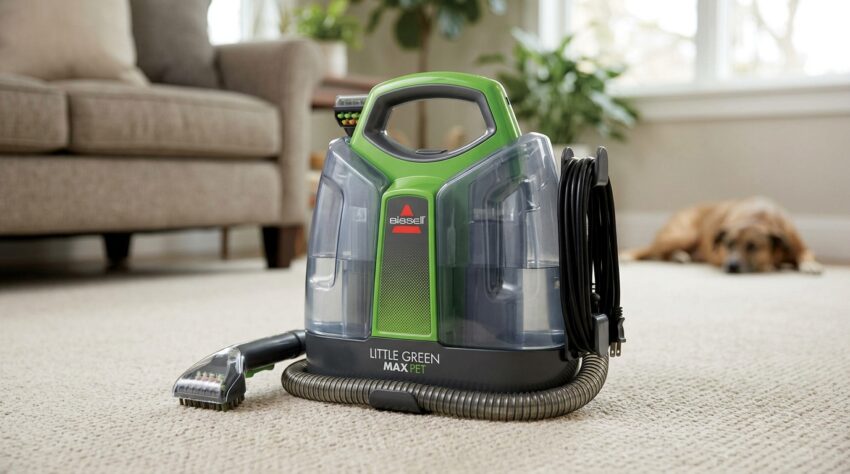
Compact portable carpet cleaners have become a familiar tool in pet households for that reason. The BISSELL Little Green Max Pet Portable Carpet Cleaner, model 3860, is positioned within that category, and its name signals a focus on pet-related messes. This guide looks at the idea behind a pet-focused spot cleaner, where it fits into everyday routines, who tends to find it practical, and what is worth thinking through before bringing one home.
A note on specifics: details such as tank capacity, cord length, weight, included tools, and the type of cleaning formula that comes with the machine can differ between listings and versions. Those details are best confirmed on the current product page. This article concentrates on the general characteristics of pet-oriented portable cleaners and on helping readers decide whether one suits their household. It does not promise particular results, since outcomes depend on the surface, the type of mess, and how quickly it is treated.
Inside the Max Pet Concept
A Portable Machine Built for Spot Work
The core idea of a portable carpet cleaner is simple. Instead of a large upright machine that moves across an entire room, it is a compact unit that can be carried to a stain, a stair tread, a car seat, or a pet bed. That makes it practical for the unplanned mess that appears in an unexpected place.
Spray-and-Extract Cleaning
Machines of this type generally apply a mix of water and cleaning solution to the affected area and then use suction to draw the dirty liquid back into a collection tank. The extraction step is meant to remove loosened dirt and moisture rather than leaving it in the fabric, which is different from blotting and hoping for the best. Anyone curious about how a particular model handles each stage should consult the instructions.
The “Pet” Positioning
Models marketed as pet versions are generally aimed at the kinds of messes animals create. That can include tools or features intended for stairs and upholstery, where pets spend a lot of time, and cleaning solutions formulated with pet households in mind. What exactly is included varies, so the product page is the best source for the contents of the box.
Separate Clean and Dirty Water Tanks
Many compact cleaners use one tank for clean solution and another for recovered dirty water. Keeping the two separate is intended to prevent the clean solution from being contaminated. Knowing each tank’s capacity helps estimate how large an area can be treated before refilling or emptying.
Handheld Tools for Different Surfaces
A hose and hand tool are commonly part of this style of machine, giving access to stairs, sofa cushions, pet beds, and the interior of a car. Some tools are designed with small bristles to help work cleaning solution into fabric. Compatibility with specific fabrics should always be checked using care labels.
Compact Storage
Because the unit is small, it can be kept in a closet, a utility cabinet, or a laundry room without taking over valuable space, which is a practical point in homes already crowded with pet supplies.
Real-Life Pet Scenarios
The best way to understand a tool like this is to picture where it gets used.
Muddy-paw season. After wet weather, pets track dirt across carpets and onto stairs and furniture. A compact cleaner offers a way to treat these marks without setting up a large machine.
Puppy training accidents. Young animals are still learning where to go. Accidents on carpet are common, and prompt treatment is generally more manageable than dealing with a long-set stain. Blotting first and then cleaning with appropriate products is a typical approach.
Senior pets. Older animals sometimes have accidents they never had before. Households in that situation often value having a convenient cleaning tool within reach.
Vomit and hairball messes. Cats in particular produce messes that need quick attention. A portable cleaner can help address the area once the solid material has been removed.
Pet beds and blankets that cannot be machine-washed. Some bedding is bulky or has components that are not meant for a washing machine. A portable cleaner is sometimes used on these items, provided the care label allows it.
The pet-friendly sofa. Furniture that doubles as the family dog’s favorite napping spot collects hair, dirt, and oils. Spot cleaning with a compatible tool is a common use, after vacuuming away loose hair.
Car seats and cargo areas. Pets that travel leave fur, mud, and the occasional accident behind. A portable cleaner makes it possible to clean in the driveway.
Stairs. Pet traffic is heavy on carpeted stairs, and a hose-and-tool setup suits that narrow, awkward space better than a full-size machine.
Who Gets the Most Out of a Pet-Focused Spot Cleaner
- Households with young animals, where accidents and muddy paws are frequent.
- Owners of senior pets, who may need to address occasional messes.
- Families with both children and pets, where spills and accidents add up.
- Renters and apartment dwellers, who want to protect carpets and handle problems quickly without storing a large machine.
- People who foster animals, since new arrivals may take time to settle into routines.
- Anyone with carpeted stairs or light-colored upholstery, where marks show quickly.
- Car owners who travel with pets, for interior touch-ups.
A pet-focused portable cleaner may be less suited to someone who wants a single machine to clean wall-to-wall carpet in several rooms in one session. For that job, a larger machine or a professional service is usually more efficient, and a compact cleaner works as a complement.
Before You Buy: Honest Considerations
It is a spot cleaner, not a whole-room solution. Treating a few spots is where this style of machine shines. Using it across a large area would take considerable time and frequent refilling.
Results vary by stain and fabric. Fresh messes generally respond better than old ones. Some stains may lighten rather than disappear, and certain fabrics or dyes can be more sensitive than others.
Odor expectations should be realistic. Pet messes can leave odors in carpet, padding, and subfloor. A surface cleaner can help address what is on the fabric, but deep-set odors may require additional steps, and some situations call for professional help. Reading the manufacturer’s guidance about odors is worthwhile.
Check care labels and test first. Before cleaning any fabric, review its care tag and test the machine and solution in a hidden spot. This is a simple way to avoid color changes or damage.
Use the right solution. Compact cleaners are designed to work with particular cleaning formulas. Using unsuitable products can affect performance or the machine, so follow the manufacturer’s instructions.
Know the power source. Confirm whether the specific version is corded or battery powered, and think about how that matches the places you plan to clean, such as the car or the stairs.
Plan for drying. Wet cleaning leaves fabrics damp. Good airflow, an open window, or a fan helps, and it is sensible to keep pets off damp carpet until it is dry.
Think about maintenance. Emptying and rinsing the tanks and tools after each use, and letting parts dry, helps prevent odors from building up in the machine itself.
Consider the cost of solution over time. Cleaning formulas are a recurring purchase, so it helps to know how much solution a typical cleaning uses.
Pet safety matters. Keep pets away from the area while cleaning and until the surface is dry, and store cleaning products where animals and children cannot reach them. If a pet is sensitive or has health concerns, a veterinarian can offer guidance about household cleaning products.
A Practical Routine for Pet Messes
Even the best tool works better with a good routine. A simple sequence is helpful for most pet accidents.
Step one: remove the solid material. Use paper towels or a scraper to lift anything solid, working from the outside in so the mess does not spread.
Step two: blot, do not rub. Press clean cloths onto the area to absorb as much liquid as possible. Rubbing can push the mess deeper into fibers.
Step three: vacuum loose hair and debris if needed. For tracked-in dirt or hair, vacuuming first lets the cleaner focus on the stain rather than the debris.
Step four: test a hidden area. Check that the solution and method are safe for the fabric.
Step five: apply solution and extract. Follow the machine’s instructions for applying cleaning solution to the area, then make extraction passes until little liquid is recovered.
Step six: rinse and extract again if directed. Some instructions suggest a rinse pass with clean water to remove residue, which can help prevent sticky patches that attract dirt.
Step seven: let it dry thoroughly. Use ventilation or a fan to speed up drying.
Step eight: clean the machine. Empty and rinse the tanks and tools, and store them dry.
Pet-Focused Cleaners Compared With Other Approaches
Blotting and hand-applied pet stain sprays are inexpensive and convenient for small accidents. They are a useful first response, but they do not extract moisture and dirt the way a suction-based machine is designed to.
Pet-focused portable cleaners, such as this BISSELL model, combine application and extraction in a small, easy-to-store unit. They are designed for spot cleaning and for places that are hard to reach with larger machines.
Full-size upright carpet cleaners cover larger areas and often hold more water, but they take more space and more setup, which is why many households reserve them for periodic deep cleans.
Professional cleaning services are an option for whole-home cleaning, heavily soiled carpets, or stubborn odors. They are typically used occasionally rather than for each accident.
Washable covers and throws are another way pet owners protect furniture. Using them alongside a portable cleaner can reduce how often the furniture itself needs to be cleaned.
Many pet households use a combination: washable covers for furniture, quick blotting for small accidents, a compact machine for stains that need more than blotting, and an occasional deep clean for the whole carpet.
Keeping Pet Households Cleaner Between Accidents
A spot cleaner handles problems after they happen, but a few everyday habits reduce how often those problems appear.
Vacuum on a regular schedule. Pet hair and dander build up in carpet and upholstery quickly. Frequent vacuuming keeps surfaces cleaner and makes spot cleaning more effective when a mess does occur.
Groom pets regularly. Brushing reduces loose hair around the house. Regular paw wipes after muddy walks can also limit the dirt that reaches the carpet.
Provide designated spots. Washable blankets or beds in a pet’s favorite places keep fur and oils off the furniture. These are easy to launder, which saves the carpet cleaner for tougher jobs.
Keep up with routines. Predictable feeding and outdoor schedules help reduce accidents, especially for puppies and recovering or older pets. If accidents increase suddenly in an adult pet, a veterinarian can help rule out health causes.
Use mats at entrances. A rug or mat at the door catches a good share of the mud and moisture pets bring in.
Treat spots quickly. The sooner a mess is blotted and treated, the less likely it is to settle deeply into fibers.
Schedule deeper cleans. Periodic deep cleaning, by machine or by a professional, helps with the buildup that spot cleaning does not reach.
These steps do not remove the need for a cleaning tool, but they make that tool more of a convenient helper than a constant necessity.
A Short Checklist for Pet Households Before Ordering
Pulling the practical points together can make the decision simpler.
- Confirm the exact model. Check that the listing matches the model you have in mind and review the specifications on the current product page.
- Look at what is included. Note the tools, hoses, and any sample cleaning solution that come with the machine, and whether more needs to be purchased separately.
- Check the power source. Confirm whether it is corded or battery powered and consider how that fits where you plan to clean.
- Think about tank size. Consider whether the capacity suits the size of the accidents you expect to handle.
- Review solution guidance. Find out which formulas the manufacturer recommends, how much is used per cleaning, and what ongoing costs might be.
- Plan storage and upkeep. Decide where the machine and its supplies will live, and make sure you are comfortable with emptying and rinsing the tanks.
- Consider your surfaces. Think about whether you will use it mostly on carpet, stairs, upholstery, or in the car, and check care labels for each.
- Set expectations on odors and old stains. Understand that results vary and that some situations may need extra steps or professional help.
- Check return and support information. Knowing the return window and how to contact support is a sensible safeguard for any purchase.
Working through this list helps turn general interest into a confident decision that matches your home, your pets, and your expectations.
Common Questions from Pet Owners
Is this meant to replace a full-size carpet cleaner? Generally, no. It is intended for spot cleaning, stairs, upholstery, and car interiors. A larger machine is typically more efficient for cleaning entire rooms.
Will it remove pet odors? A cleaner can help address what is on the surface of the fabric, but deep-set odors may require additional steps. Results depend on the situation, so reading the manufacturer’s guidance and keeping expectations realistic is wise.
Can it be used on upholstery and pet beds? Portable cleaners are commonly used on those surfaces, but fabric care labels should always be checked first, and a hidden-area test is a good precaution.
How soon should I treat an accident? As soon as it is practical. Fresh messes are generally easier to treat than old ones.
Do I need a special cleaning solution? Machines in this category are designed to work with specific formulas. Follow the manufacturer’s instructions for what to use and how much.
How long will carpet take to dry? Drying time depends on how much water was used, the thickness of the carpet, and airflow. A fan or an open window can help.
Is it safe to use around pets? Keep pets away during cleaning and until the surface is dry, and store solutions out of reach. If you have concerns about specific products and your pet, ask a veterinarian.
Where can I find the exact specifications for model 3860? The current product page is the best source for tank capacity, included tools, power source, and dimensions.
Closing Thoughts
The BISSELL Little Green Max Pet Portable Carpet Cleaner (3860) reflects a practical idea for households with animals: a compact, easy-to-store machine meant for the muddy paws, accidents, and spills that arrive without warning. For owners of young or senior pets, families with both children and animals, and anyone with carpeted stairs or light upholstery, a portable spot cleaner can make everyday messes feel more manageable.
It is not a substitute for a larger machine or a professional service, and results will vary depending on the stain, the fabric, and how quickly it is treated. The most helpful approach is to confirm the specifications on the current listing, check fabric care labels, follow the manufacturer’s instructions, and keep expectations realistic. With those points in mind, readers can decide for themselves whether a pet-focused portable cleaner fits their home and their routine.