Introduction
A stain has a way of showing up right after the room has been tidied. A mug tips over beside the armchair, muddy paws cross the hallway runner, or a snack leaves a greasy smudge on the stair carpet. Left alone, these marks settle into the fibers and become harder to deal with. A vacuum collects dry crumbs and dust, but it was never built to handle sticky, soaked-in soil.
This is the gap that compact carpet and upholstery cleaners try to fill. They are small enough to live in a closet or under a stairwell, and they follow a simple routine. Cleaning solution goes onto the soiled spot, the fibers are agitated, and suction draws the dirty liquid away. For a single mark, this can feel far more reasonable than renting a full-size extractor.
Some portable cleaners add a heating element, and that is the idea behind the BISSELL Little Green HydroSteam, model 3618. This guide explains what the machine is, how its features are designed to work, which households may find it useful, and what a careful shopper should think through first.
The article is written from general knowledge of the product category and not from hands-on use. It makes no promises about results. For exact specifications, included accessories, or current details, the official product listing is the right place to check.
Product Overview
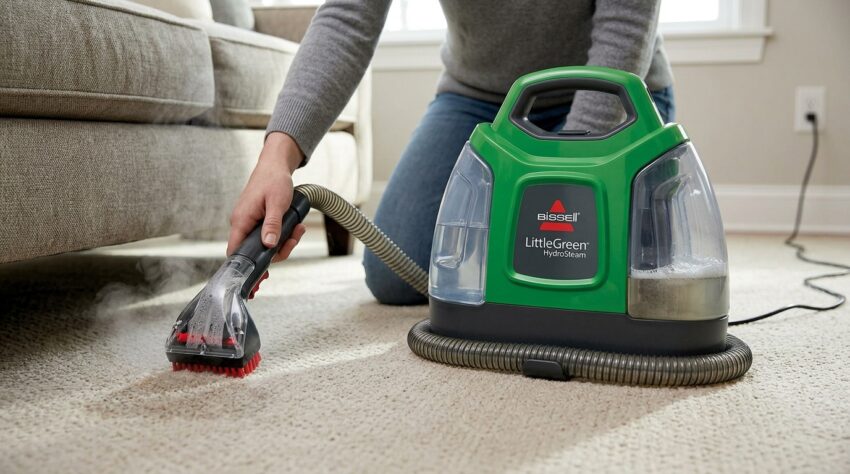
The BISSELL Little Green HydroSteam 3618 is a portable carpet and upholstery cleaner. Machines in this group are corded and compact, designed for spots and small patches rather than entire rooms. The usual layout includes a clean-water tank for solution, a separate tank that holds the dirty liquid pulled from the surface, a flexible hose, and a handheld tool on the hose end.
The name itself carries a few hints:
- Little Green: the family name tied to compact spot-cleaning machines.
- HydroSteam: a reference to a heated cleaning approach. How the heating works, and how it compares with other models, is best confirmed on the official listing.
- Portable: the unit is made to be carried to the mess, not pushed around a room.
- Carpet Cleaner: it is aimed at soft surfaces such as carpet, rugs, and fabric furniture.
Put simply, this machine is meant for handling stains, spills, and small soiled areas. It works best as a targeted household tool, not as a stand-in for professional cleaning of an entire home.
The Basic Process
Models differ in the details, but most machines of this type work in roughly the same order:
- Water and a suitable cleaning formula are poured into the solution tank.
- The machine sends that liquid to the surface through the hose and tool.
- Bristles or a ridged surface on the tool help work the soil loose.
- Suction pulls the used liquid into the recovery tank.
Since liquid is applied and then removed, the area is damp afterward and needs time to dry. The method has more in common with rinsing than with scrubbing by hand.
Households That May Find This Category Relevant
A heated portable cleaner is often looked at by:
- Pet owners who deal with the occasional accident on carpet or fabric
- Parents managing spills, sticky fingers, and snack crumbs
- Renters who want a way to treat stains without booking a service
- People with carpeted stairs or upholstered pieces that are awkward for big machines
- Drivers who want to tackle mud and spills in a car interior
Whether it suits a particular home depends on the surfaces, the frequency of messes, and the storage space on hand.
Key Features
Product names tend to squeeze a lot of meaning into a few words. The sections below unpack each main feature in everyday terms and describe what it may offer.
The Heated Cleaning Approach
“HydroSteam” is the most distinctive part of the name. In general, machines that use heat are designed on the idea that warmer water may help loosen some kinds of residue more easily than cool water does. Most people already know this from the kitchen sink or the laundry room, where warm water is a common choice for greasy or sticky soil.
It helps to keep that in proportion. Heat is only one ingredient, and it does not replace the cleaning formula, the agitation from the tool, or the extraction step. Some fabrics are also sensitive to temperature, so the care label on any item deserves a look first. Details such as how the heating works, how long it takes, and any usage limits belong to the official product information.
A Small, Easy-to-Carry Body
Compact size defines the whole product family. A machine that can be lifted with one hand and set down on a landing, a bedroom floor, or a garage step makes it easier to deal with a single stain without a big setup. Compared with a full-size unit, the difference in effort can be noticeable.
The cost of that convenience is capacity. Small tanks are fine for spot work but become tedious on larger surfaces.
Solution Delivery and Extraction
Portable cleaners pair a spraying function with suction. Liquid goes down, loosened soil is lifted, and the machine draws the used liquid back out. The aim is to carry dirt away with the water instead of leaving it behind in the fibers.
How well this works depends on the type of stain, the age of the mess, the fabric, and how much liquid is applied. Steady, measured passes usually serve better than soaking an area.
The Handheld Tool
The nozzle at the end of the hose is where the real work happens. Many are fitted with bristles or textured edges that stir up the fibers as solution goes on and comes off. Its shape influences how easily it reaches into a corner, along a stair edge, or across a chair seat. Included tools can differ between versions, so the listing is the dependable source for what comes with the 3618.
Hose Length
A flexible hose lets the user work on stairs, sofas, or a vehicle interior without constantly shifting the main body. Lengths and flexibility vary, so anyone planning to clean stairs or a car may want to check the stated measurement.
Two Separate Tanks
Keeping fresh solution apart from recovered liquid is standard in this category. It stops dirty water from being sprayed back onto the surface and lets the user see how much has been drawn out. Tank size decides how often the user must stop to refill and empty.
Corded Power
These machines usually plug into a wall outlet. A cord supports steady operation, which matters more when a heating function is involved, since heating generally draws more energy than basic spraying and suction. The drawback is reach. Stairs, other floors, or a parked car may call for an extension cord or a bit of planning.
A Range of Soft Surfaces
Portable cleaners are commonly described as suitable for carpet, rugs, upholstery, stairs, and car interiors. Not every material handles water-based cleaning, and heat adds one more reason for caution. Delicate fabrics, natural fibers, and anything labeled dry-clean only may not be appropriate. Checking the care tag and testing a hidden patch first are widely recommended habits.
Materials and Design
Compact extraction machines are typically molded from plastic, with clear or semi-clear tanks that make liquid levels easy to read. Plastic keeps the body light enough to carry even with water inside.
Construction Details
Because the machine handles liquid, and in this case heat, some small points deserve attention. Shoppers may want to look at how firmly the tanks lock, how well the lids seal, how securely the hose connects, and how the handle feels when the tanks are full. Details like these often shape day-to-day use more than a spec sheet does.
Tank Layout
Clear tanks make it obvious when solution is running low and how much dirty water has collected. A wide opening simplifies filling and rinsing, while a narrow one can be awkward to empty, especially when pet hair or debris is in the liquid.
Heating Components
A model with a heating function has more internal parts than a basic one. That may add useful capability, but it also means more components to think about over the long term. Following the manual’s instructions on water type, fill levels, and storage helps the machine be used as intended.
Storing the Hose and Tool
Many portable cleaners have a spot on the body for the hose and tool. It sounds minor, yet it affects how easily the machine is pulled out and put away, and it keeps accessories from wandering off.
Weight Once Filled
Even a small unit gets noticeably heavier with a full tank. Carrying it up a staircase or out to the driveway feels different from lifting it empty, so it is worth checking the listed weight and picturing it loaded with water.
Look and Finish
Styling on cleaning equipment is mostly practical. Colored accents often mark tanks and removable parts so they are easier to identify. For most people, ease of use counts for more than appearance.
Performance
Talking about performance responsibly means separating what a product is designed to do from what any one person will experience. This article is not based on hands-on testing, so what follows describes design intent, not measured outcomes.
What the Machine Is Meant to Do
The 3618 is designed to help clean small areas of carpet, upholstery, stairs, and similar soft surfaces. It delivers solution, helps loosen soil through the tool, and extracts the used liquid. The heated approach suggested by the name is intended to add another element to that routine.
What Shapes Real-World Results
Results depend heavily on circumstances. Some of the biggest factors include:
- Stain type and age: Fresh spills tend to be easier than set-in marks.
- Fabric: Synthetic fibers, natural fibers, and delicate upholstery react differently to liquid and heat.
- Depth: Liquid that reaches padding or cushion foam is harder to extract fully.
- Formula: A product suited to both the machine and the surface matters.
- Technique: Slow, overlapping passes with moderate liquid generally work better than rushing or oversaturating.
- Drying conditions: Airflow, humidity, and room temperature affect how long the area stays wet.
Because of these variables, two households can describe the same machine very differently. A mark that fades in one home may linger in another, so product descriptions are best read as statements of intent, not promises.
Thinking Realistically About Heat
It is easy to assume that more heat means better cleaning, but the reality is less tidy. Some stains respond to warmth, while others behave differently depending on what caused them. Certain marks are commonly treated with cooler water, and some fabrics can be harmed by heat. Checking the stain type, the material, and the manufacturer’s directions is a sounder approach than leaning on any single feature.
Pet Odors
Odors can be stubborn. Some stay near the surface, while others sink into padding or the subfloor underneath. A portable cleaner is built mainly for the top layer and upper fibers, so deep or long-standing smells may need extra steps or professional help.
Dampness and Drying
Treated areas stay damp for a while. How long depends on the amount of water used, the humidity, and ventilation. Opening a window or running a fan may help, and it makes sense to keep children and pets off the spot until it has dried.
Sound and Handling
Extraction machines make noise through the motor and suction system. Loudness varies, and some animals are sensitive to it. Handling comes down to weight, hose flexibility, and how comfortable the tool feels in the hand.
Common Uses
A portable heated cleaner is generally meant for targeted jobs, not for whole-house upkeep. Here are some situations where people typically reach for this kind of machine.
Pet Accidents
Accidents on carpet and rugs are one of the most common reasons people look at this category. Treating them promptly may limit how deeply they soak in, though outcomes vary.
Dining Area Spills
Fabric chair seats, rugs under the table, and carpeted corners often catch juice, sauce, or coffee. Acting early is usually easier than dealing with a spill after it has dried.
Carpeted Stairs
Stairs gather dirt in the same few spots and are awkward for large machines. A compact unit with a hose and handheld tool is often easier to use on steps.
Sofas and Armchairs
Upholstered furniture picks up marks over time. After checking the fabric care label, a portable cleaner may be used with a suitable tool.
Pet Beds and Cushions
Fabric pet beds and throw cushions can hold dirt and odor. Whether machine cleaning is appropriate depends on the material and the maker’s care instructions.
Car Seats and Mats
Vehicle interiors collect mud, crumbs, and spills. A portable machine can be carried out to the car, as long as a power source is within reach.
Entryways and Hallways
Dirt from shoes and paws gathers near doors. A portable cleaner lets the user treat those zones without cleaning an entire room.
Advantages
Every product has strengths, and they are worth looking at without exaggeration. Here are some possible advantages of this style of machine.
Light and Easy to Stash
A portable body takes up less room than a full-size cleaner, which can matter in apartments and smaller homes.
A Heated Option
For people who like the idea of warm-water cleaning, a model with a heating function offers something basic portable units may not. How much it matters depends on the stain and the surface.
Fast Response
Having a machine at home may make it simpler to treat a spill early, when cleanup is often more manageable.
Several Surfaces, One Machine
Carpet, upholstery, stairs, and car interiors can all be covered by the same unit.
Clean and Dirty Water Kept Apart
Separate tanks help the machine work more cleanly and show how much soil has been removed.
Cleaning Only Where Needed
Instead of treating a whole room for one stain, the user can focus on a single area, which may save time and effort.
Things to Consider
A balanced look also has to cover possible limits. Suitability depends on personal preference, household needs, and the kinds of messes involved.
Not Made for Whole Rooms
Small tanks and a compact footprint suit spots and small areas. Using it on an entire room could mean many refills and a long session.
Heat Does Not Suit Every Fabric
Some materials are sensitive to heat or moisture. Care labels and manufacturer guidance should come first.
Stain Age Matters
Old or deeply set stains can be harder to treat. Realistic expectations help, since no machine removes every mark.
Drying Takes Time
Surfaces stay damp after cleaning. In humid or poorly ventilated rooms, drying can take longer.
Frequent Refills
Small tanks need regular refilling and emptying, especially when several spots are treated in one session.
Outlet Access
A corded machine needs a nearby outlet. Stairs, vehicles, and distant rooms may call for an extension cord or some planning.
Cleanup Afterward
Tanks, hoses, and tools should be rinsed and dried after each session to prevent odors and buildup. Some people find that step tedious.
Personal Comfort
Weight, noise, hose length, and tool shape are subjective. What feels fine to one person may feel awkward to another.
Comparison with Similar Product Categories
Rather than comparing specific brands, it is more helpful to see how portable heated cleaners differ from other cleaning categories.
Compared with Portable Cleaners Without Heating
Portable machines without a heating function rely on spraying, agitation, and extraction alone. Models with heat add one more variable, along with extra components and more attention to fabric compatibility. Some people value the added option, while others prefer a simpler machine.
Compared with Full-Size Carpet Extractors
Full-size machines are made for entire rooms, with larger tanks and wider cleaning paths. They are heavier and need more storage space. Portable units give up capacity in exchange for convenience.
Compared with Standard Vacuums
Vacuums pick up dry debris such as dust, crumbs, and hair. They are not meant to treat liquid stains or soil that has soaked into the fibers. A portable cleaner solves a different problem, and many households keep both.
Compared with Handheld Steam Tools
Steam tools use vapor for tasks such as loosening residue on certain surfaces. They work differently from spray-and-extract machines, and a spray-and-extract unit physically removes the liquid, which many vapor-only tools do not.
Compared with Hand Cleaning
Cloths, brushes, and store-bought stain removers need no equipment but depend on scrubbing and do not pull liquid out of deeper fibers. A machine adds convenience and extraction, but it also adds cost, storage needs, and upkeep.
Compared with Professional Services
Professionals bring larger equipment and experience with many stains and fabrics, which may suit big areas or tricky situations. A home machine allows immediate action without an appointment.
Maintenance and Care
Good upkeep helps any cleaning machine work as intended for longer. Always check the manufacturer’s manual for model-specific guidance, and unplug the unit before doing any maintenance.
Empty the Recovery Tank
After each use, pour out the dirty-water tank and rinse it. Leftover liquid can cause odors and buildup.
Rinse the Solution Tank
If solution remains, empty and rinse the tank, particularly before storing the machine for a while.
Follow the Water Guidance
For models with a heating function, the manual may specify the type and temperature of water and the fill level. Sticking to those directions helps the machine run as designed.
Wash the Tool and Nozzle
Hair, fibers, and residue collect in the tool. Rinse or wipe it as the manual suggests, and make sure the spray openings are clear.
Check the Hose
Look for blockages or trapped debris. Clearing an obstruction gently helps maintain suction and flow.
Let Everything Dry
Allow removable parts to air-dry before reassembling and storing them. Damp components can encourage odors or mildew.
Wipe the Outside
A slightly damp cloth is enough for the exterior. Keep liquid away from electrical parts and the cord.
Choose Suitable Formulas
Products intended for the machine are generally recommended. Unsuitable chemicals may damage internal parts or leave residue on surfaces.
Store Sensibly
Keep the machine somewhere dry and away from heat sources. Storing the hose and tool with the body makes them easier to find later.
Frequently Asked Questions
1. What kind of machine is the BISSELL Little Green HydroSteam 3618?
It is a portable carpet and upholstery cleaner meant for small-area cleaning. It delivers a cleaning solution, helps loosen soil with a handheld tool, and extracts the dirty liquid into a recovery tank.
2. What does “HydroSteam” mean?
The name points to a heated cleaning approach. The specifics of how it works and how it differs from other models are best confirmed on the official listing.
3. Does heat automatically mean better stain removal?
Not necessarily. Warmth may help with some kinds of residue, but results depend on the stain, the fabric, the formula, and technique. Heat is one factor among several.
4. Can it clean a whole room of carpet?
It is intended mainly for spots and small areas. A full room is possible but may take many refills and a lot of time, so some people choose a larger machine for that.
5. Is it safe on all upholstery?
No. Suitability depends on the fabric. Check the care label and test a small hidden area first, especially when heat is involved.
6. Will it remove every stain?
No machine can promise that. Fresh stains are generally easier to treat, while older or deeply set marks may remain partly visible.
7. Can it help with pet odors?
It may reduce surface-level odors by removing the residue behind them. Odors that have soaked into padding or subfloors may need further steps.
8. How long does carpet take to dry?
It depends on how much liquid was used, the humidity, the temperature, and the airflow. An open window or a fan may speed things up.
9. Does it have to be plugged in?
Yes, machines of this type are generally corded. An extension cord may be handy for stairs or vehicles.
10. Can it be used on stairs and in a car?
Portable cleaners are often used in both places because the body can be set down while the user works with the hose and tool. Convenience depends on hose length, outlet access, and the tools included.
11. How should it be cleaned after use?
Empty and rinse both tanks, clean the tool, check the hose for blockages, and let everything dry before storing. The manual has model-specific steps.
12. What should I think about before choosing a portable carpet cleaner?
Consider the surfaces you want to treat, how often messes happen, your storage space, cord reach, and how much weight you are comfortable carrying. Reading the manufacturer’s specifications can help show whether the machine fits.
Final Thoughts
The BISSELL Little Green HydroSteam 3618 sits in a particular corner of home cleaning equipment: a compact, corded spot cleaner with a heated approach, meant for spills, stains, and everyday messes on carpet, upholstery, stairs, and similar surfaces. Its small size and heating feature are designed to make quick, targeted cleaning feel more manageable.
Like any appliance, it comes with trade-offs. A small body is easy to carry but limits tank capacity. A heated function may be appealing, though it adds components and calls for extra care with certain fabrics. And while a portable cleaner can cut down the effort of tackling accidents, it also brings chores such as rinsing tanks and drying parts.
A sensible way to decide is to start with your own household. Think about which surfaces you clean most, how often messes occur, how much room you have for storage, and how you feel about the upkeep. A machine that matches those needs is more likely to feel worthwhile than one chosen for a single feature.